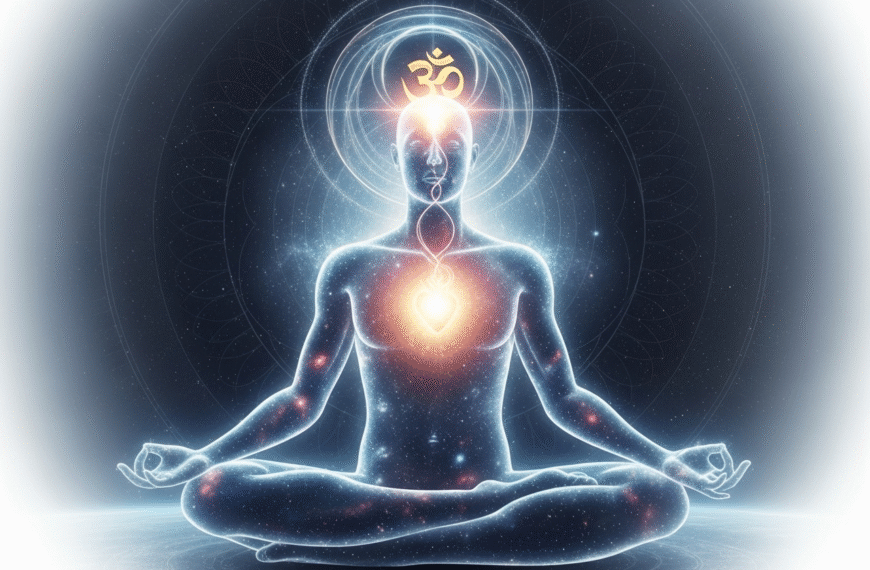

The Yoga of Knowledge and the Stillness of the Soul
The Seeker Who Could Not Rest
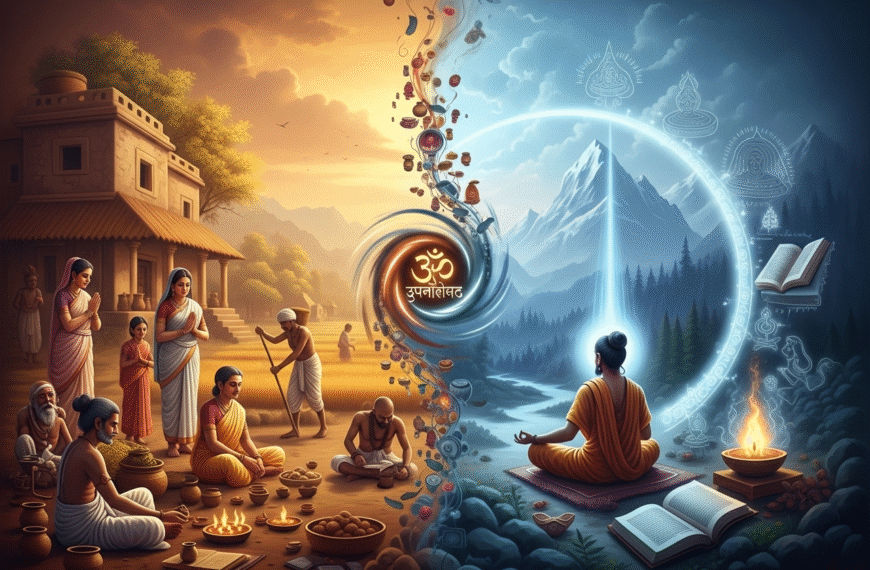
In the ancient town of Purana in South India lived a learned Brahmin named Suśarma — a man of intellect, austerity, and unwavering devotion. His days were a rhythm of ritual precision; his nights, hymns of contemplation. He lived in harmony with the scriptures, his heart cleansed by truth, his mind sharpened by study. The gods, they said, were pleased with him. The ancestors, too, blessed his line.
And yet — for all his learning, all his ritual, all his scrupulous virtue — peace eluded him.
Suśarma’s life was a portrait of external order masking an internal storm. The verses he recited brought duty, not delight. The austerities he observed cleansed his conduct, not his heart. In the silence of dawn, when lamps flickered before his altar, he often asked himself:
“Why does serenity escape even the righteous? What veil stands between ritual and realization?”
His was not a failure of faith, but of fulfillment — a malaise that strikes even the devout when the mind obeys the law but not the spirit.
The Pilgrimage of the Restless Mind
Driven by that question, Suśarma journeyed north to Prayag, the sacred confluence where the Ganga, Yamuna, and Saraswati meet — a place where the outer rivers of earth merge with the inner rivers of thought.
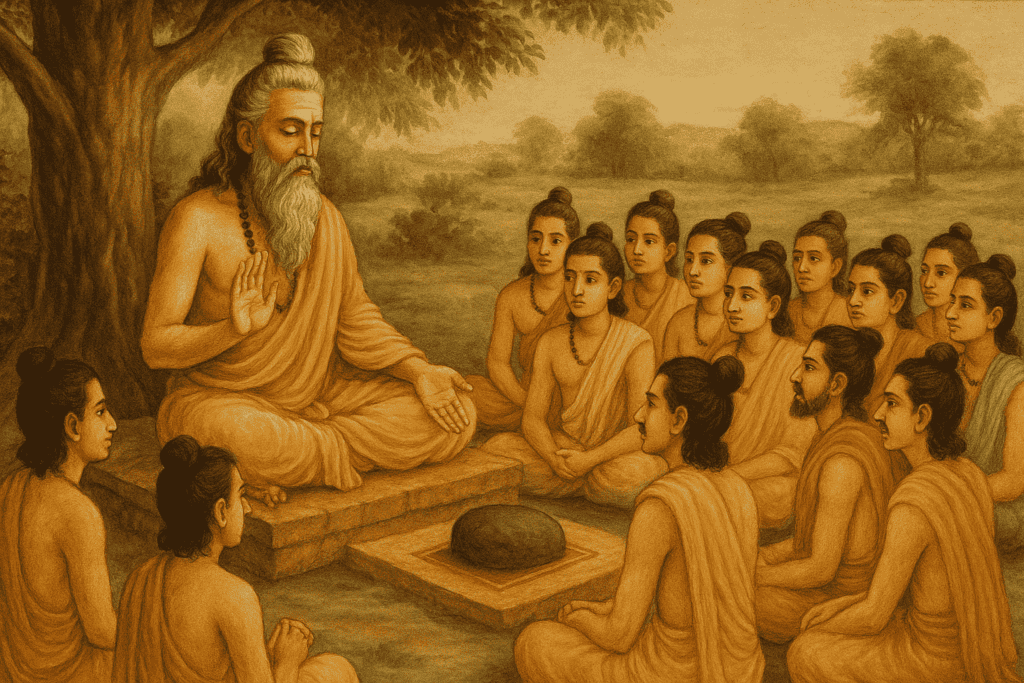
There, among the throng of monks and philosophers, a symposium of sages was unfolding — a gathering of intellects probing the mysteries of life and liberation. Into their circle stepped Suśarma, his voice trembling with both humility and yearning.
“O learned ones,” he said, “since birth, I have lived by dharma, avoiding sin and clinging to the sacred word. Yet, within me, no calm abides. My rituals are perfect, my observances exact — but my heart knows no rest. Tell me, I beg you, what leads to true tranquility? Is there a path beyond mere conduct that brings peace to the mind?”
The sages fell silent for a moment — not out of doubt, but reverence. Then one among them spoke with serene conviction:
“O noble Suśarma, the path you seek lies not in the precision of karma, but in the depth of jnana — knowledge. If you desire stillness, recite each day the second chapter of the Bhagavad Gītā, the Sāṅkhya Yoga, the Yoga of Knowledge. Within its verses breathes the secret to mental poise and the liberation of the soul.”
And to make him understand the power of that sacred chapter, they narrated a tale — as ancient as the Himalayas and as haunting as the human heart.
The Ghost and the Goat: A Parable of Redemption
Long ago, in the radiant city of Pratiṣṭhāna, there ruled a virtuous king named Durdama. Under his reign, prosperity flowed, and peace prevailed. Among his subjects lived a Brahmin named Vikrama Śarma, who lived upon the generosity of the king’s gifts — rice from the royal granary, coins from the treasury, garments from the palace store.
But the bounty of kings carries a shadow. Unknown to Vikrama Śarma, the gifts of another’s wealth also bear the subtle stains of another’s karma. What is received in material ease can be repaid in spiritual burden.
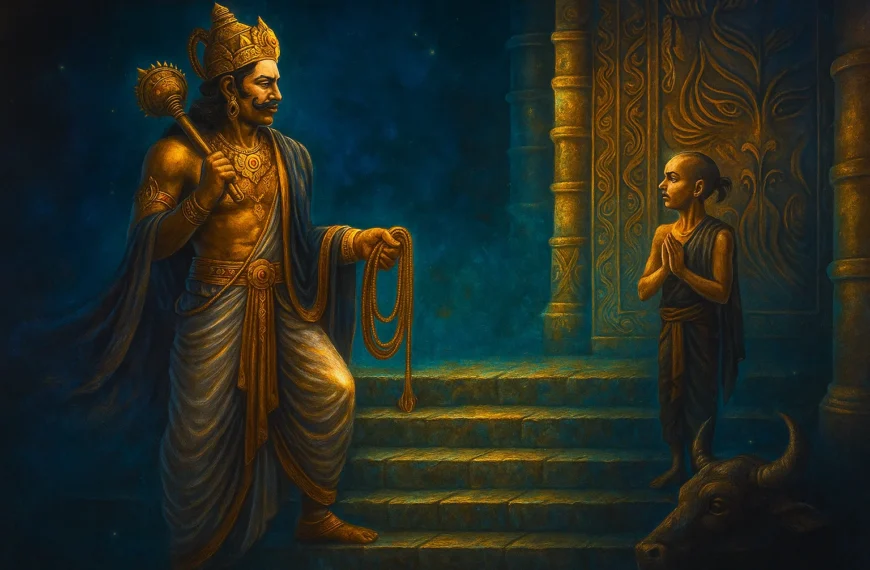
Thus, when Vikrama Śarma died, he faced the judgments of Yama — the Lord of Death — and was cast into hell, tormented for sins that were not his own but transmitted through the unpurified wealth of others. After many cycles of pain, he was reborn — not in peace, but in a destiny woven by the residue of his past.
In that next birth, he married a woman named Karkaśa — her name itself meaning cruelty. Her heart was dark, her mind ensnared by passion. One night, urged by her secret lover, she murdered Vikrama Śarma as he slept, severing his head in betrayal.
Thus ended one life — and began another.
The Brahmin’s soul, now restless, became a wandering ghost, drifting through the forest — bound not by chains of matter but by the fetters of vengeance. And Karkaśa, after her own death, faced her karmic trial, only to be reborn as a goat, grazing helplessly in the wilderness.
One day, the ghost saw the goat and knew — in that beast was the soul of his betrayer. Rage flared within him, fierce and ancient. He approached, his spirit vibrating with wrath — yet with every step closer, something miraculous unfolded.
The hatred within him began to dissolve.
The fury, like mist before dawn, began to fade.
Unseen by them both, the second chapter of the Bhagavad Gītā was being recited in a nearby hermitage. The air was filled with the verses that declare the imperishability of the soul — the voice of Kṛṣṇa teaching Arjuna that death is but a change of garment for the eternal spirit.
As those sacred words entered their awareness, the ghost and the goat — victim and murderer, bound in hatred through lifetimes — were freed from their karmic bondage. Listening to the vibrations of that divine teaching, both attained release and ascended to the higher realms.
The sages concluded:
“O Suśarma, if even a ghost and a goat can find salvation through the hearing of the Gītā, how much more can a seeker like you gain by its daily recitation! Recite the second chapter, and you shall find the peace you have long sought.”
The Second Chapter: The Yoga of Knowledge (Sāṅkhya Yoga)
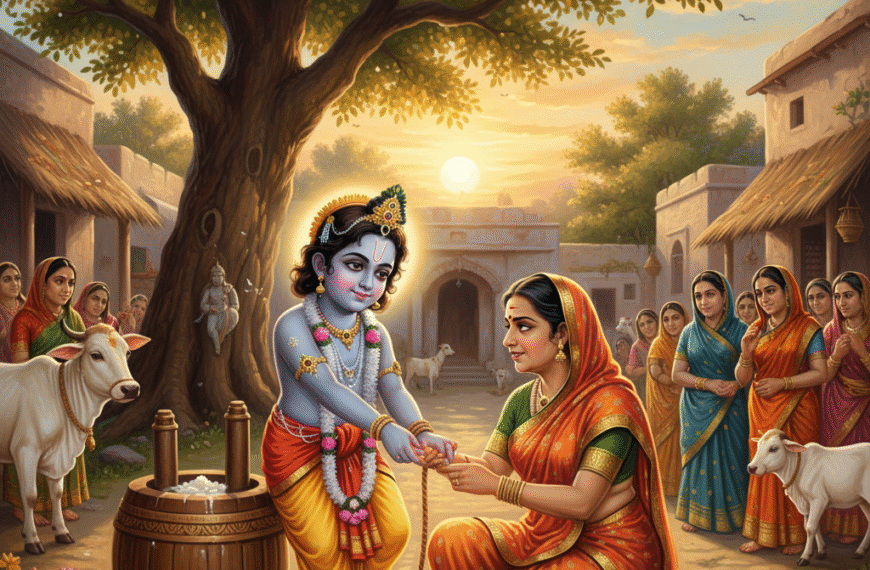
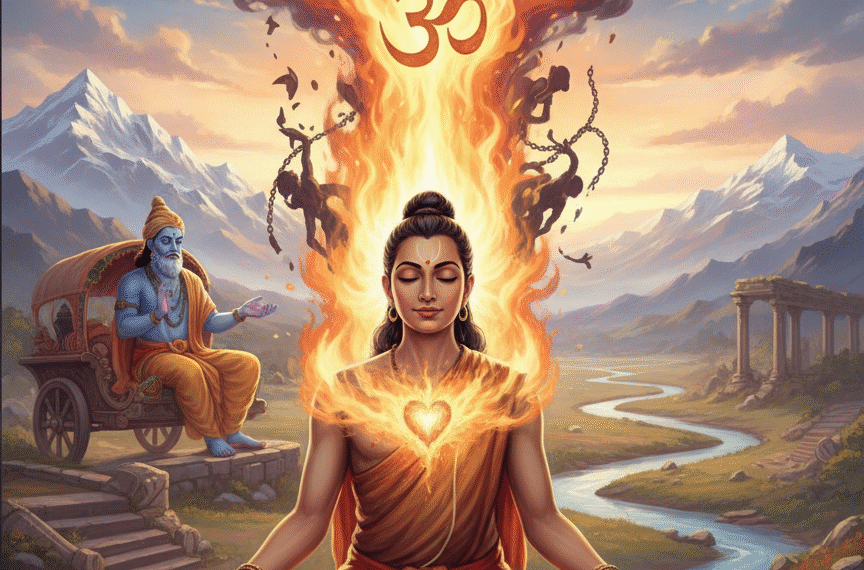
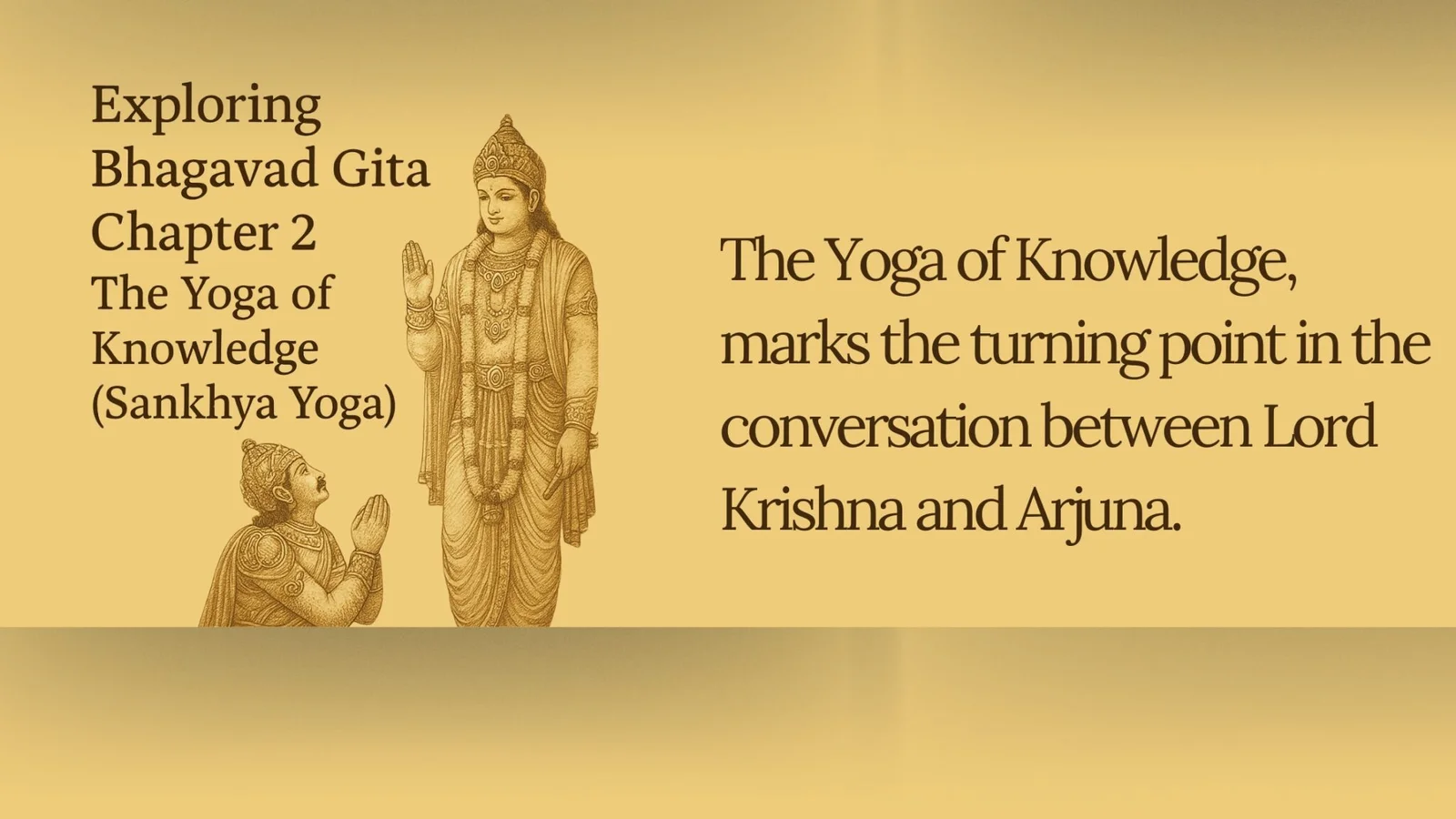
The second chapter of the Bhagavad Gītā stands as one of the most luminous moments in spiritual literature. It begins with despair — the despair of Arjuna, the warrior who faltered at the sight of battle, unwilling to fight his own kin. His bow slipped from his hand; his heart drowned in sorrow.
Then spoke Śrī Kṛṣṇa, with a divine smile that pierced through illusion:
“You grieve for those who need not be grieved for, Arjuna. The wise neither mourn for the living nor the dead.”
In that one line lies the essence of all Vedānta — the recognition that life and death are but tides upon the eternal ocean of the Self.
Kṛṣṇa unveils the truth of the Ātman, the indestructible soul:
“It is unborn, eternal, changeless, and ancient. Weapons cannot cleave it, fire cannot burn it, water cannot wet it, and wind cannot dry it.”
The soul neither slays nor is slain. When the body falls, the Self merely sheds its worn-out garment and dons a new one — as effortlessly as day turns into night.
Evenness Is Yoga
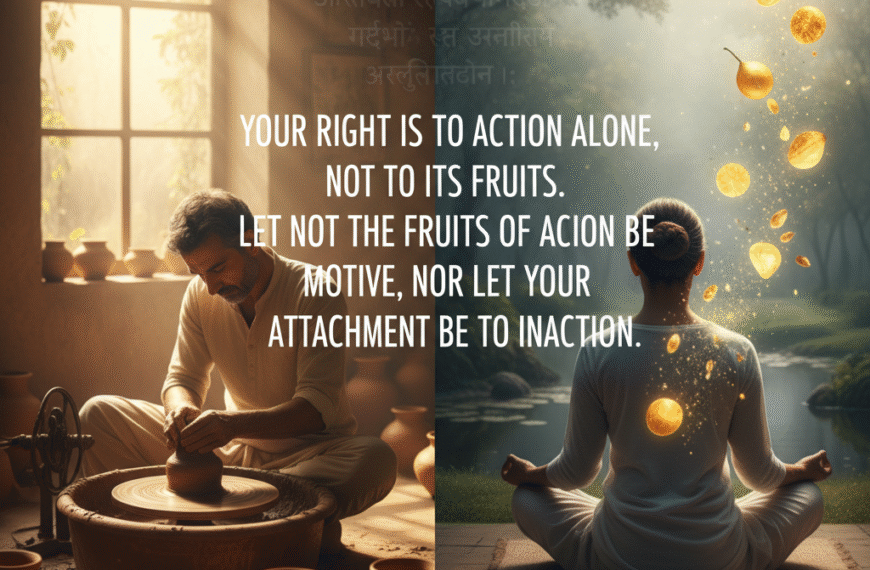
Then Kṛṣṇa reveals the art of inner balance — the secret of action without attachment:
“Thy right is to action alone, never to its fruits. Let not the fruits of action be thy motive, nor let thy attachment be to inaction. Evenness of mind is Yoga.”
This is the heart of the Gītā — the transition from religion to realization. True spirituality, Kṛṣṇa teaches, is not withdrawal from the world, but engagement with it without clinging to reward or fear of loss.
Act, but remain unmoved by success or failure.
Love, but remain untouched by possession.
Fight, but not in hatred — act in truth, not in tension.
Such a one is free, even amidst the chaos of battle.
The Enlightened One: The Sthitaprajña
Arjuna, humbled, asks: “What is the state of a man of steady wisdom — the Sthitaprajña? How does he speak, how does he walk, how does he live?”
And Kṛṣṇa describes the Jīvanmukta, the one liberated while still living:
“He has renounced all desires. He is free from longing, ego, and fear. He is neither elated by pleasure nor dejected by pain. His senses are under his command. His mind is tranquil, like a lamp in a windless place.”
Such a person no longer depends on the outer world for joy, for his bliss springs from within. He lives in the world, yet the world cannot bind him. He acts, but his actions leave no residue of karma. His life flows like a river that knows its way to the sea.
The Whisper of Immortality
Suśarma listened, recited, and lived the second chapter each day. The words became not verses but experiences — the body, a temple; the mind, a lake of stillness. The restlessness that once haunted him melted into clarity.
For the first time, peace did not visit him — it stayed.
And in that peace, he realized what the sages had always known:
That the Gītā is not a scripture of war, but a manual of awakening.
That liberation lies not in renouncing life, but in seeing life rightly.
That the battlefield of Kurukṣetra is within each of us — and so is the voice of Kṛṣṇa.
The second chapter, the Sāṅkhya Yoga, is not a lesson in philosophy — it is an invitation to remember:
that you are not the restless waves of thought,
but the silent ocean beneath.
Closing Reflection
When recited with devotion, the second chapter becomes more than sound — it becomes a vibration of awakening. It teaches that serenity is not the absence of chaos, but the mastery of it; that bliss is not a reward, but a recognition.
As Kṛṣṇa tells Arjuna — and through him, all humanity —
“Perform every action with evenness of mind.
The soul is eternal. The wise grieve for none.
He who knows this lives in peace,
Though the whole world be in turmoil.”

 By
By