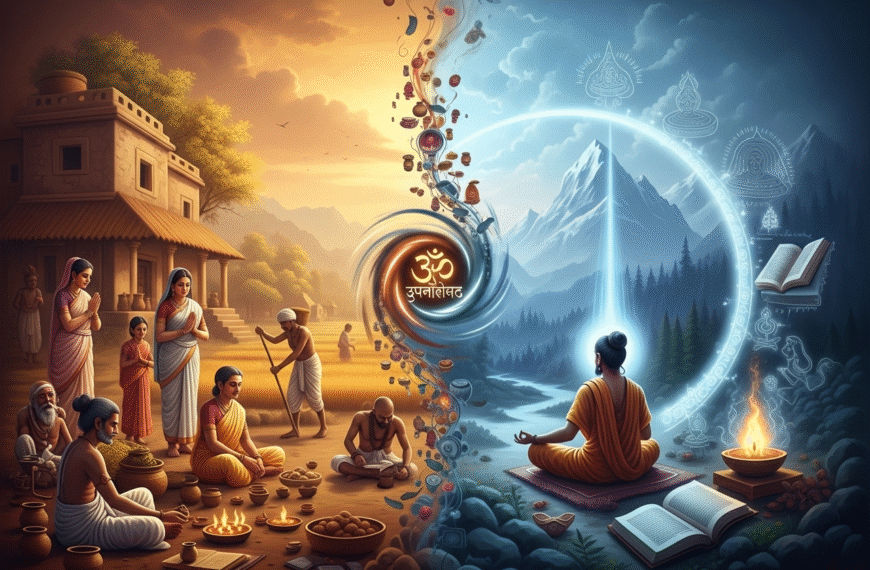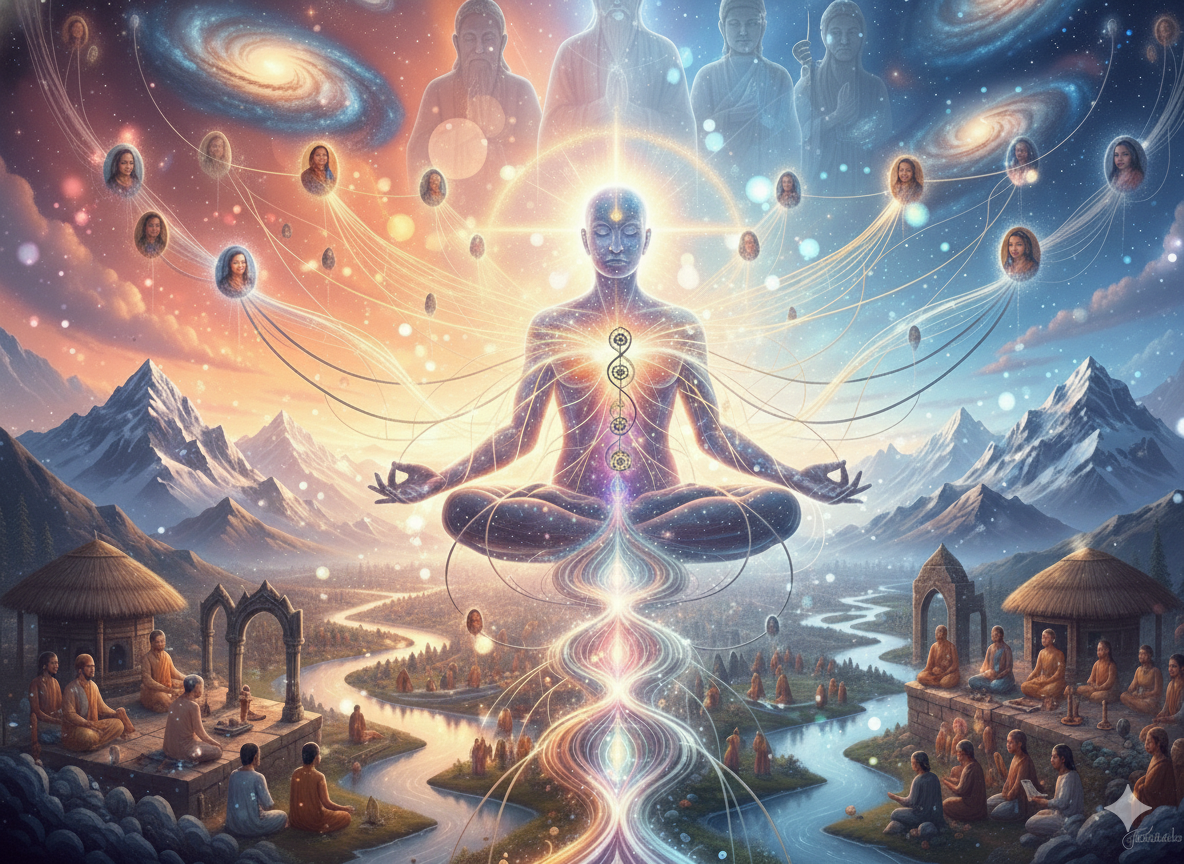

In the vast tapestry of human existence, we often find ourselves grappling with fundamental questions: What is the nature of our actions? Do they bind us, or can they liberate us? How do we navigate a world of constant activity while seeking a state of inner peace? These are not new questions; they have echoed through the hearts of seekers for millennia. Ancient Hindu wisdom traditions offer us not just abstract answers, but vivid narratives and profound sanatana philosophies that illuminate the path.
Today, we delve into one such powerful juxtaposition: a stark, cautionary tale of two souls named Pingala and Aruna, and the sublime wisdom of the Bhagavad Gita’s fifth chapter, the Karma-Sanyasa Yoga or the Yoga of Renunciation of Action. The story serves as a dramatic illustration of the laws of cause and effect, while the Gita provides the master key to transcend them. Together, they reveal the intricate dance between our karma (actions), the ever-present possibility of grace, and the true meaning of a liberated life.
Part 1: The Tangled Web of Karma – The Story of Pingala and Aruna
Our story begins in the ancient city of Purukutsa, with a man named Pingala. He was a brahmin by birth, a station that society associated with learning, virtue, and spiritual pursuit. Yet, Pingala was a stark contradiction to his lineage. The text describes him as a “mean stone in a quarry of sacred Saligrama”—a powerful metaphor. A Saligrama is a sacred fossil stone, revered as a natural manifestation of the divine. To be a common stone in a quarry of such holy relics implies a soul that, despite being surrounded by the potential for divinity, has chosen to remain inert, mundane, and profane.
Pingala’s life was a testament to this choice. He immersed himself in the world of the senses, finding his company among actors, gamblers, and adulterers. His life was a whirlwind of transient pleasures—singing, dancing, and indulgence—a relentless pursuit of external gratification. His wife, Aruna, mirrored his path, living a “life of a free-lance,” untethered by commitment or virtue. Their existence was a textbook example of life lived purely at the mercy of sensory impulse, a life devoid of self-reflection or higher purpose.
This unbridled pursuit of desire inevitably curdles into darkness. In a chilling act of betrayal, Aruna murders her husband, viewing him as a mere obstacle to her freedom. This is the ultimate consequence of a life built on selfishness: relationships become transactional, and life itself becomes disposable.
The story does not end with their deaths. The laws of karma are inexorable. Both Pingala and Aruna suffer in the hellish realms, facing the energetic consequences of their choices. This is not a punishment meted out by an angry god, but a natural rebalancing. A life of aggression, passion, and ignorance creates a momentum, a karmic trajectory that continues after the body is shed. Eventually, their karma ripens into new forms. Pingala is reborn as a fierce eagle, a predator. Aruna is reborn as a small, vulnerable bird.
They find themselves in the same forest, their past-life animosity still simmering within their consciousness. The eagle, driven by the memory of betrayal embedded deep within its being, instinctively attacks and kills the small bird. The cycle of violence continues, a grim echo across lifetimes. This is the nature of unpurified karma: it creates patterns, compulsions that we repeat endlessly, often without understanding why. We see this in our own lives—the same arguments with loved ones, the same self-sabotaging behaviours, the same fears replaying in different contexts. These are the threads of our past actions, weaving the fabric of our present reality.
Part 2: The Divine Interruption – A Fall into Grace
Just as the cycle seems doomed to repeat, something extraordinary happens. A hunter, a neutral force of nature, aims an arrow at the eagle. The eagle falls, but its descent is guided by what the text calls “divine will.” It lands directly upon the head of a Mahatma, a great, realised soul, deep in meditation.
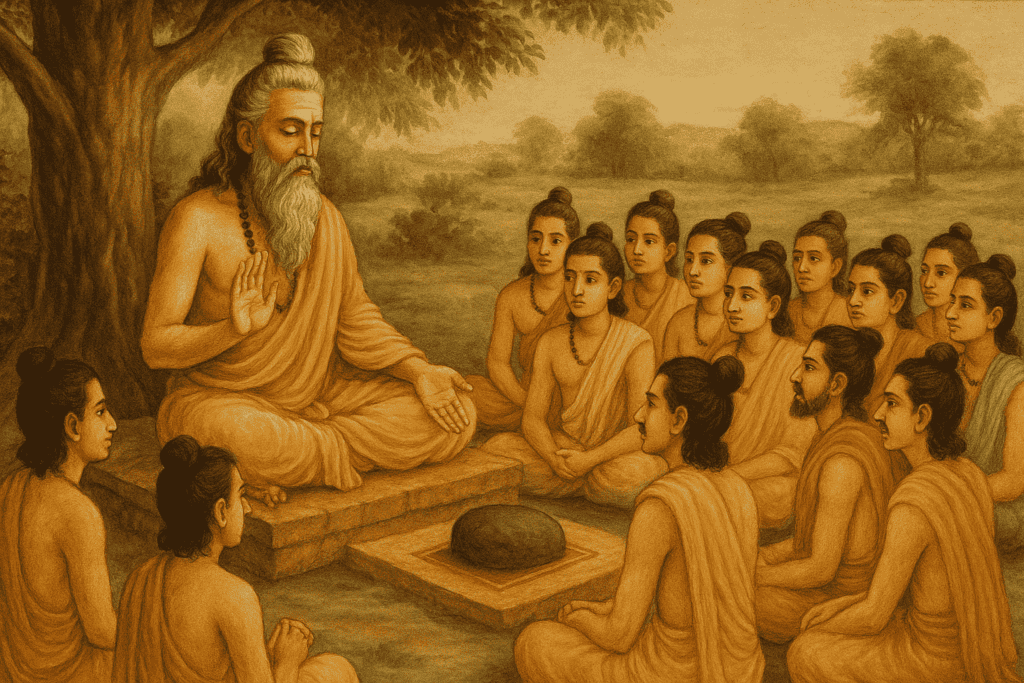
This is the pivotal moment in the narrative. The fall is not an accident; it is an act of grace. The head of a Mahatma is not merely a physical location. It is a space charged with immense spiritual potency. A Mahatma is one who has realised the truths we are about to explore in the Gita. Their very being emanates a vibration of peace, wisdom, and purity. It is a sanctified space, a living temple. For the remains of these two tormented souls to land in such a field of consciousness is an act of profound, cosmic purification.
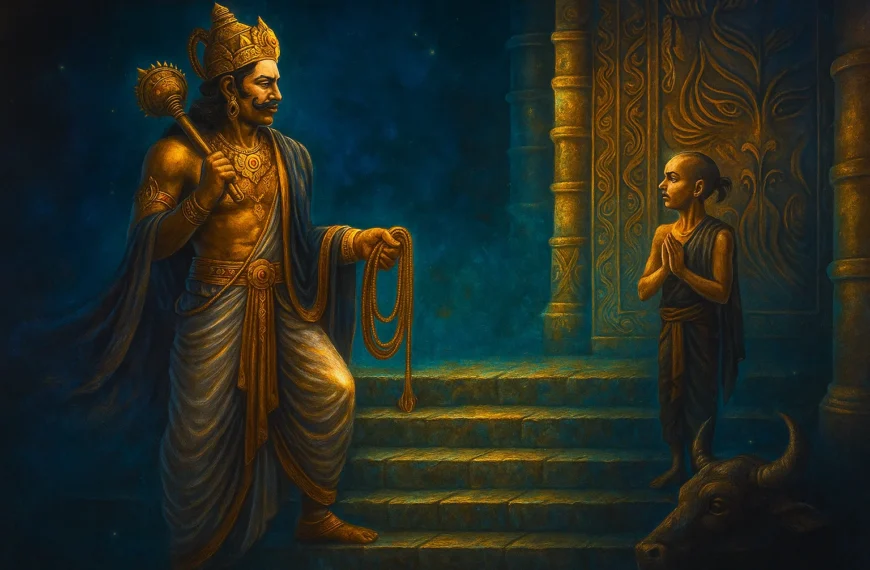
When their souls are brought before Yama, the Lord of Cosmic Justice (Dharmaraja), the verdict is not what one would expect based on their lifetimes of sin. Yama, who sees the totality of the cosmic ledger, declares them purified. Why? Because their bones made contact with a Rajayogi, a Brahmin who was a living embodiment of the Gita’s fifth chapter. The sage’s daily recitation and, more importantly, his living embodiment of this wisdom had created an aura so powerful that it could transmute the densest karma.
The sage went to Brahmaloka, the highest celestial realm, and by the grace of their connection to him, Pingala and Aruna were liberated from their vicious cycle. They ascended to Vaikuntha, the abode of supreme peace. This story powerfully illustrates a key spiritual principle: while our own efforts are crucial, the power of sanga (holy association) and divine grace can intervene in ways that defy the simple logic of action and reaction. It shows that no soul is ever truly beyond redemption.
Part 3: Unraveling the Mystery – The Wisdom of Karma-Sanyasa Yoga
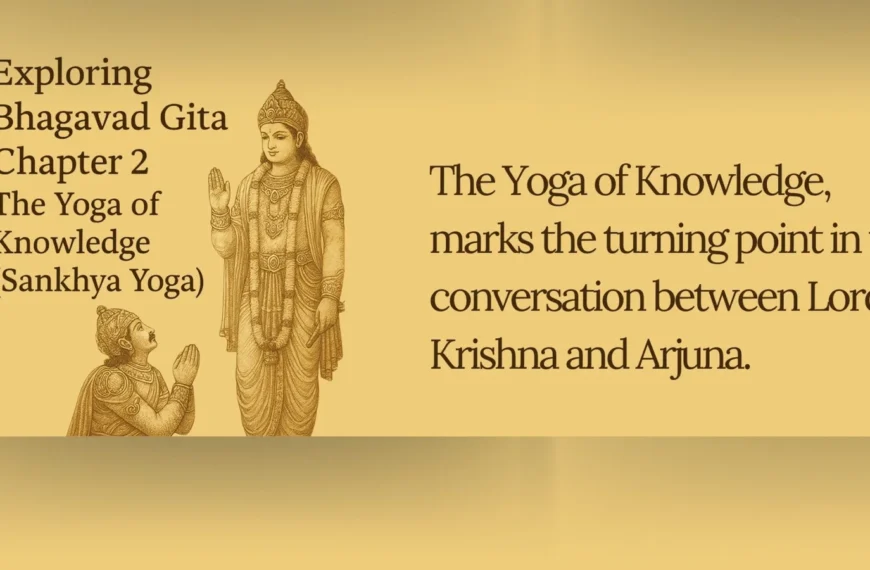
The story of Pingala and Aruna is a drama of karma. The teachings of the Mahatma who saved them provide the script for liberation. This is the wisdom of the Bhagavad Gita, Chapter 5, which resolves one of the greatest spiritual dilemmas: Should we act in the world, or should we renounce it?
Action vs. Renunciation: A False Dichotomy
Arjuna, the warrior-prince, voices this very confusion. “O Krishna,” he asks, “you praise renunciation of actions, but you also praise the yoga of action. Tell me conclusively, which is better?”
Krishna’s reply is a masterstroke of spiritual guidance. He states that both paths lead to the same goal, but for the majority of humanity, Karma Yoga (the path of selfless, detached action) is superior to and easier than the renunciation of action itself.
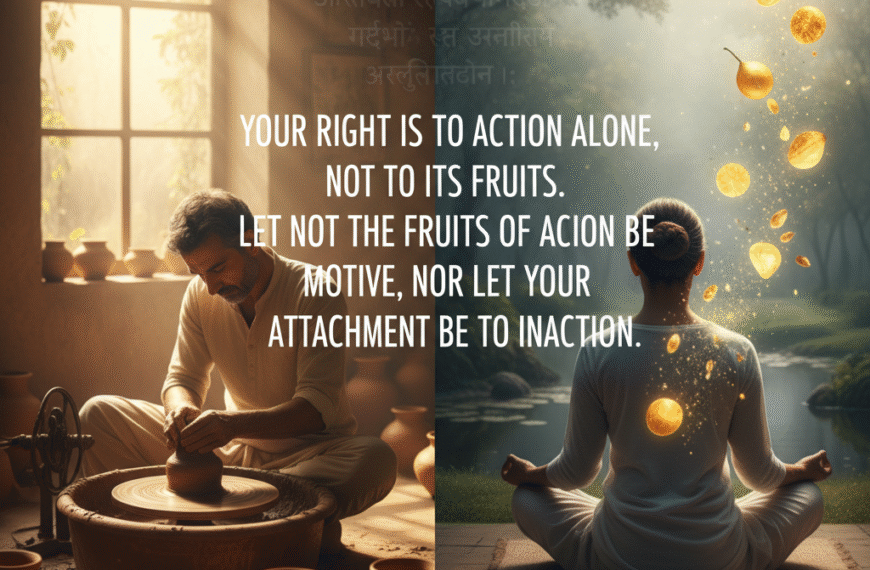
The ignorant see these as separate. They imagine a meditating hermit in a cave as the “renouncer” and a busy person in the world as the “actor.” Krishna reveals that this is a superficial understanding. True renunciation is not about abandoning the world, but about abandoning the attachment to the fruits of our actions and the egoistic sense of being the doer.
Consider a skilled surgeon performing a life-saving operation. She acts with immense focus, precision, and dedication. Yet, she is detached from the ultimate outcome. Her duty is to perform the surgery to the best of her ability. Whether the patient lives or dies is subject to a thousand variables beyond her control. She does her work with excellence, offers it up, and lets go of the result. This is Karma Yoga in practice. It is the art of acting with full commitment while remaining inwardly free.
The True “Doer”: Beyond the Ego
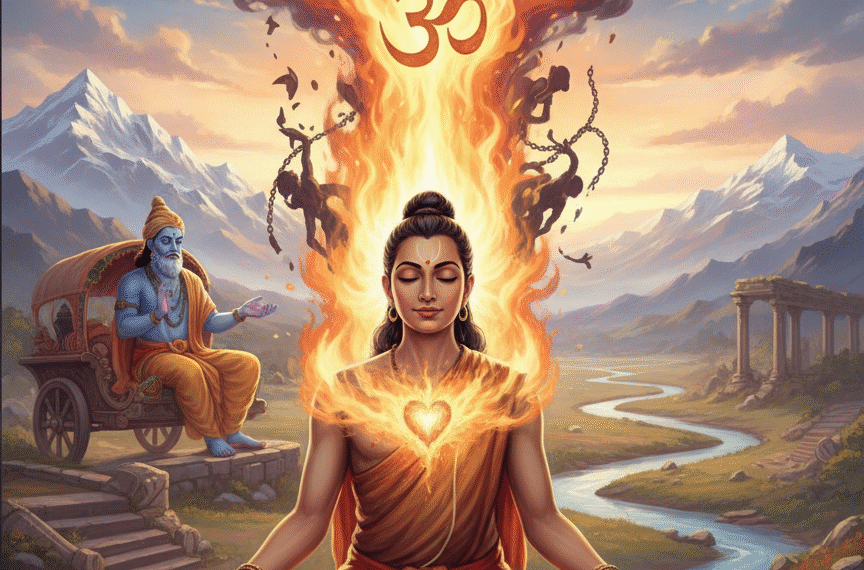
This leads to the next profound insight. Krishna explains that a true Seer, one who is established in truth, understands, “I am not the doer.” While seeing, hearing, touching, sleeping, or breathing, they recognise that it is the senses interacting with the sense objects.
This is not a call to be a passive automaton. It is a radical shift in identity. We typically identify with our actions: “I am walking,” “I am talking,” “I achieved this.” The Yogi, however, dis-identifies from the machinery of the body and mind. They witness the body walking, the mouth talking, the mind thinking. They understand that these are functions of Prakriti (Nature), operating according to their own laws. The true Self, the Atman, is the silent, changeless consciousness that illuminates these activities. God, Krishna says, does not create our sense of agency or our attachment to results; it is our own nature, our own ego, that does this. To let go of the “doership” is to find unimaginable freedom.
The Vision of Oneness: Seeing God in All
This brings us to the state of the Mahatma upon whose head the eagle fell. His power came from this sublime vision: “The sages look equally upon a Brahmin endowed with learning, with humility, a cow, an elephant and even a dog and even an outcast.” (Verse 18).
This is one of the most revolutionary verses in all of spiritual literature. It does not mean these beings are identical in their external form or function. It means the wise person sees the same divine light, the same eternal Self (Atman), shining within every form. They look past the temporary costumes of the brahmin, the outcast, the cow, and the dog, and see the one actor playing all the parts.
This vision is the root of true compassion. It dissolves judgment, prejudice, and separation. The Mahatma’s consciousness was a field of this non-dual awareness. When the bones of Pingala and Aruna fell into this field, they were bathed in the purifying energy of oneness, which washed away the karmic stains of their dualistic, selfish lives.
Part 4: The Inner Sanctuary – The Practice of Liberation
The Gita does not leave us with high-minded philosophy alone. The final verses of Chapter 5 provide a clear, practical roadmap to achieving this liberated state.
First, find happiness within. The Yogi understands that all enjoyments born of sense-contact “are verily sources of sorrow.” Why? Because they have a beginning and an end. The pleasure of a sweet taste lasts only a moment. The thrill of a new possession fades. Chasing these fleeting joys is like trying to quench thirst with saltwater. True, “endless bliss” is found when we withdraw our attachment from the external world and discover the fountain of joy within our own soul.
Second, master the inner world. The true Yogi is one “who can withstand… the impulses of desire and anger” before leaving the body. This is a call for emotional mastery. It is easy to be peaceful in a quiet room. The challenge is to remain centered amidst the provocations of life. Desire and anger are powerful currents that can sweep us away. The Yogi builds an inner dam of awareness, allowing these impulses to arise without being controlled by them.
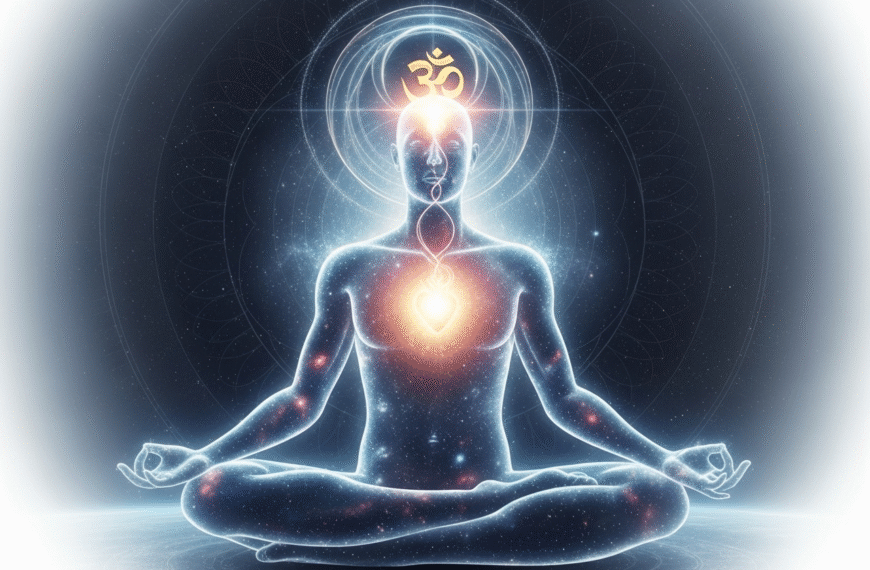
Finally, Krishna gives a specific meditative technique. It is a journey inward:
- Keep away all external contacts: Withdraw the senses from their objects (Pratyahara). Turn your attention from the outer world to the inner landscape.
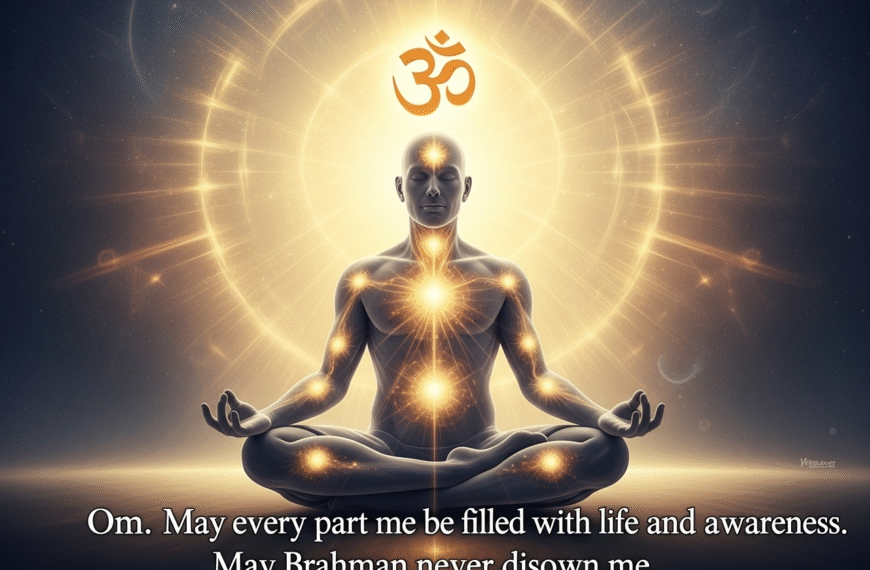
- Fix the vision between the eye-brows: This is a point of concentration (Drishti) that helps to still the wandering mind.
- Balance the outgoing and incoming breath: This is the practice of Pranayama, which calms the nervous system and harmonises the life-force energy.
- Control the mind, intellect, and senses: With the breath calm, the deeper faculties can be brought under conscious control.
- Rivet the attention on salvation: Hold liberation as your highest goal, free from desire, fear, and anger.
The sage who masters this inner practice, Krishna declares, “is verily liberated for ever.” They have found the kingdom of heaven within.
Conclusion: From Pingala’s Fall to Our Potential
The story of Pingala and Aruna is a mirror. In their extreme lives, we can see reflections of our own attachments, our own cycles of anger and desire, our own karmic patterns. Their story is a sobering reminder that a life lived for the senses alone is a tangled web of suffering, repeating across time.
But their story is also one of breathtaking hope. It teaches us that grace is real and can appear in the most unexpected ways—as the fall of an eagle, the presence of a sage, or a moment of profound insight. The Mahatma on whom they fell represents the path and the destination. He is the living embodiment of the Gita’s wisdom.
We do not need to wait for a hunter’s arrow or a chance encounter. The wisdom of Karma-Sanyasa Yoga gives us the tools to become our own Mahatma. The path is not to flee the world of action, but to transform our relationship to it. By performing our duties with dedication but without attachment, by remembering we are the silent witness, not the ego-driven doer, and by cultivating the equal vision that sees the divine in all beings, we can purify our own karma.
Let us, then, walk our path with this understanding. In every action, let us practice renunciation of the fruit. In every interaction, let us seek the divine spark. And in our moments of quiet, let us journey to the inner sanctuary where true, unshakable peace resides. The story of Pingala and Aruna began with a fall from virtue, but it ended with a fall into grace. Our spiritual journey is to learn to fly, using the two wings of selfless action and inner wisdom, soaring into the boundless sky of liberation.

 By
By