
The Heart of the Ramayana: Unveiling the Blissful Significance of Sundara Kanda
The Ramayana is one of the world’s oldest and most loved epics. It tells the story of Lord Rama, his wife Sita, and their battle against the demon king Ravana. The entire book is divided into six parts. Five of them focus mainly on Rama.
But one part—Sundara Kanda—is special.
It focuses on Hanuman, the devoted, courageous, and big-hearted hero who becomes the bridge between Rama and Sita.
What Happens in Sundara Kanda?
Sundara Kanda begins with an unforgettable moment:
Hanuman leaps across the ocean to Sri Lanka to find Sita, who has been kidnapped by Ravana.
During this journey:
- He faces challenges and overcomes them with intelligence.
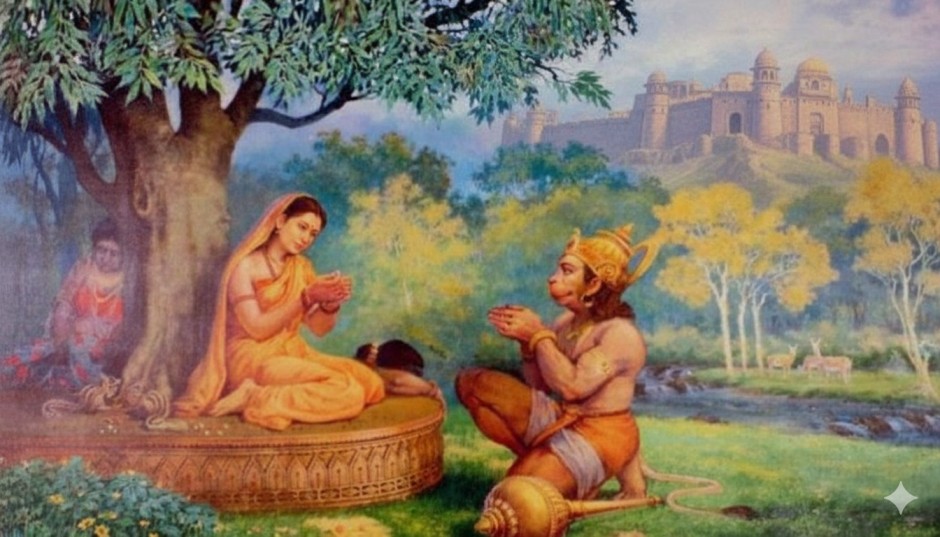
- He reaches Lanka and finds Sita in a garden, sad and imprisoned.
- He comforts her with gentle words and gives her hope.
- He destroys many demons, sets parts of Lanka on fire, and returns with the good news:
Sita is alive, safe, and waiting for Rama.
This entire section is full of courage, love, wisdom, and faith—and that is why it is called “Sundara”, meaning beautiful.
Why Is It Called the “Beautiful Chapter”?
There are many reasons:
- Hanuman is lovingly called Sundara (beautiful) by his mother.
- The poetry, descriptions, and emotions in this section are beautiful.
- Sita’s first smile after months of sorrow is beautiful.
- Hanuman’s devotion, bravery, and heart are beautiful.
- And spiritually, the message of hope is beautiful.
A famous verse says:
“Everything in this chapter is beautiful—
Rama, Sita, the story, the forest, the poetry, and Hanuman himself.”
What Does This Chapter Teach Us?
Even for people outside India or new to Hindu philosophy, the message is universal:
- Courage in tough times – Hanuman never gives up.
- Compassion – His gentle words bring Sita peace.
- Wisdom – He knows when to fight and when to be calm.
- Devotion – Every action he takes is done with love and sincerity.
- Hope – Even when life feels dark, help and strength can appear.
Sundara Kanda also symbolically teaches that:
- Sita represents the soul in distress
- Rama represents truth and the higher ideal
- Ravana represents the ego
- Hanuman represents the inner strength that reconnects us to hope, peace, and purpose
Why Do People Around the World Read It?
Across countries and cultures, people read Sundara Kanda because it is believed to:
✨ Remove negative energy
✨ Bring calm and confidence
✨ Protect against difficulties
✨ Bring blessings, peace, and prosperity
✨ Strengthen faith and emotional resilience
It can be read in the morning or evening, in any place, by anyone.
A Loved Prayer From This Chapter
When Sita realizes Hanuman’s power and goodness, she says a heartfelt prayer:
“Hanuman, please take up my cause.
Begin your effort.
Take away my sorrow.”
People around the world recite this for hope and comfort during tough times.
A Blessing for Everyone Who Reads It
At the end of reading Sundara Kanda, devotees chant:
“Wherever Rama’s name is sung,
There Hanuman stands with folded hands,
With tears of love in his eyes,
Ready to protect and remove all fear.”
Why Sundara Kanda Matters Today
Sundara Kanda is not just ancient mythology—it is a reminder that:
- Help can come when you least expect it
- Strength grows when you believe in something higher
- Devotion and sincerity create miracles
- One positive force can change the course of a whole story
It is a message of hope for the entire world.

 By
By