In the grand tapestry of human thought, there are works that do not merely speak to us, but sing to us across the chasm of time. The Srimad Bhagavad Gita is such a celestial song. Born from the luminous core of the Vedas and the profound inquiries of the Upanishads—the ancient, sprawling rivers of Indian spiritual thought—its resonance has etched itself onto the consciousness of humanity, far beyond the land of its birth. Its influence is not that of a doctrine, but of a living, breathing wisdom that pulses with the very rhythm of existence.
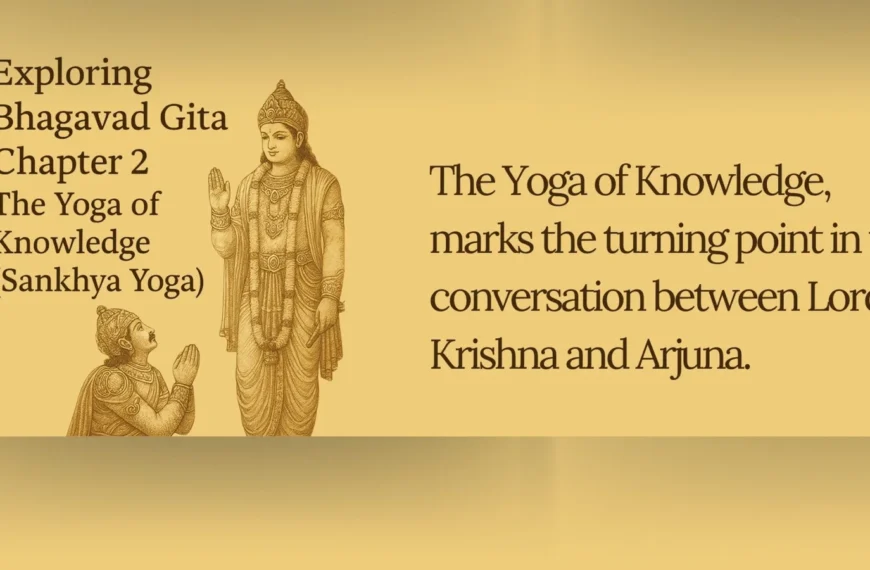
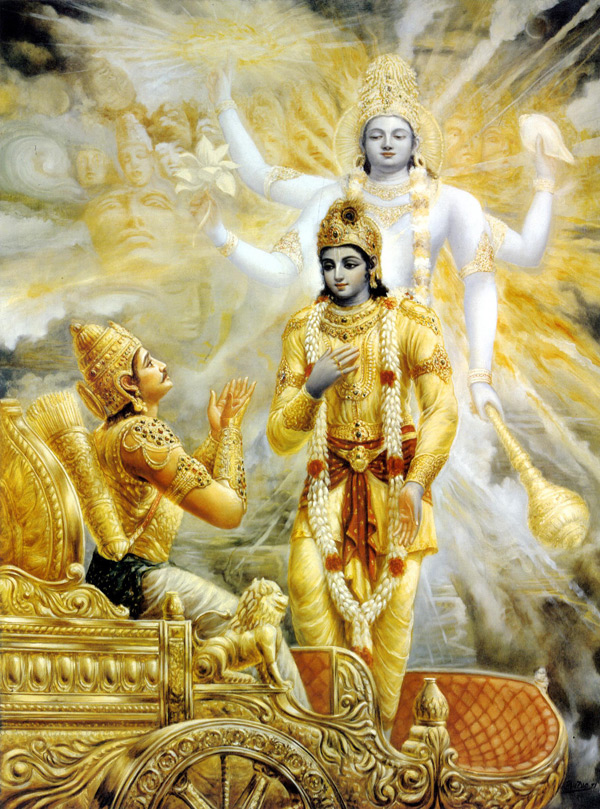
The Gita is not a scripture of commandments delivered from on high; it is a primordial dialogue that unfolds in the most dramatic of settings: the battlefield of the human soul. Here, on the cusp of a cataclysmic war, stands Arjuna—the archetype of the bewildered soul, paralyzed at the precipice of devastating choice. His crisis is our crisis. His doubt, his grief, and his search for clarity in a world of conflicting duties mirror the existential dilemmas that haunt every thoughtful human being.
And to him speaks Krishna—not merely as a god, but as the intimate friend, the divine charioteer, the voice of the Infinite whispering in the heart of the finite. Their sacred conversation is a map for the soul’s journey from despair to liberation. It is a guide to navigating the labyrinth of life, not by renouncing the world, but by transforming action itself into a sacred offering. The Gita teaches the ultimate spiritual alchemy—a method for transmuting the lead of our mundane duties, our fears, and our attachments into the gold of enlightened action and inner freedom.
This is why the Gita has captivated the deepest minds of both East and West, from the transcendentalists and existentialists to the pioneers of quantum physics. It does not ask for blind faith but ignites the fire of inquiry. It offers a universal framework for understanding our place in the cosmos, for reconciling the paradoxes of free will and destiny, and for discovering the eternal Self that dwells, serene and untouched, beneath the turbulence of the mind.
This series you are about to embark seeks to build a new bridge to this ancient wisdom. It recognizes that the most profound truths are often best understood not through dense exegesis, but through the heart’s language of story. In this unique translation, each chapter is prefaced by a parable—a small narrative vessel designed to carry the chapter’s immense philosophical weight, making the abstract intimate and the timeless, immediate. Following each story, the core teachings are distilled into clear, unambiguous prose, inviting the modern reader into a direct and personal engagement with the text.
In an era saturated with noise and starved of meaning, the Gita is more than timely; it is a vital, living presence. It is an invitation to still the chaos, to listen for the song within, and to realign our inner compass toward the eternal. This book is a key.
The dialogue now begins anew—within you.


 By
By